Dreaming Leopard

Is this a leopard daydreaming, or am I mistaken? It looks incredibly relaxed and satisfied, with a distant gaze, as if deep in thought. Perhaps it’s contemplating its next meal.
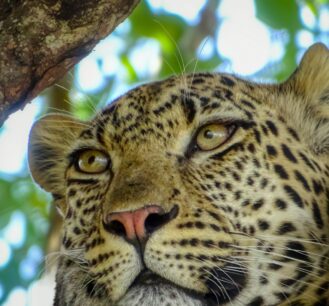
Is this a leopard daydreaming, or am I mistaken? It looks incredibly relaxed and satisfied, with a distant gaze, as if deep in thought. Perhaps it’s contemplating its next meal.
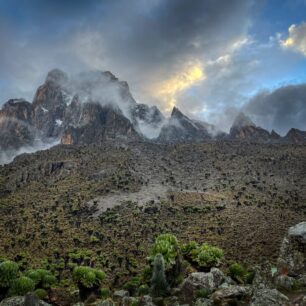
Waking early at Shipton’s Camp on Mount Kenya, I witnessed the clouds parting after a stormy night of relentless snow and torrential rain. The high altitude and the tumultuous weather had made sleep a challenge. But this morning, the skies were clearing, and rays of sunshine peeked through the dissipating clouds.
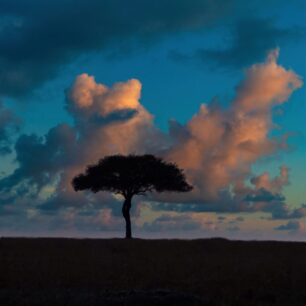
In a serenely flat expanse of the Masai Mara savanna, a solitary acacia tree stands silhouetted against the fading evening light. The sun has already dipped below the horizon, leaving only a dramatic cloud formation hanging majestically above. It’s a breathtaking sight on a tranquil evening in the Masai Mara.
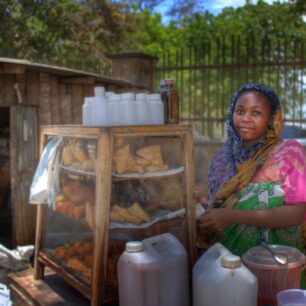
Early morning in Msambweni, a gentle breeze carries the scent of the ocean. On the main square, bustling with activity even at this hour, I found a small stand near the hospital. A young woman smiled as I ordered a mandazi. It was still warm, the perfect balance of crisp and fluffy. A delicious start to my day and a reminder of the warm hospitality and simple pleasures of Kenya’s south coast.
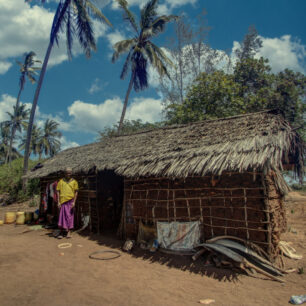
In the Kenyan coastal region, traditional houses stand as a testament to the resourcefulness of the local people. These simple yet efficient dwellings are constructed with a skeleton of locally sourced branches, twigs, then filled with mud for a quite solid and strong wall, and then topped with a makuti (palm thatch) roof. The interior often features a compacted mud floor and a small fireplace for cooking.
This photo captures the essence of coastal living, showcasing a homeowner proudly standing beside his simple house, a symbol of both tradition and practicality in a land where you will need a steady home when monsoon rain hits the coastal regions.
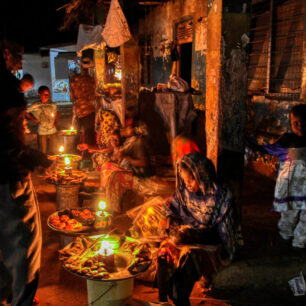
In the small coastal settlement of Munje, daily life buzzes with activity, from small bicycle and motorcycle repairs to tiny shops with groceries and household goods. As the sun dips below the horizon, a unique scene unfolds: the Munje evening fried fish market.
Under the soft glow of kerosene lamps—the only source of light in this community—a handful of women gather to sell their freshly caught and fried seafood. The flickering flames dance across their faces, creating a picturesque image that begs to be captured on a slow shutter speed. The blurred movement of the vendors and the twinkling lights add a sense of magic to this humble market, a testament to the resilience of the community.
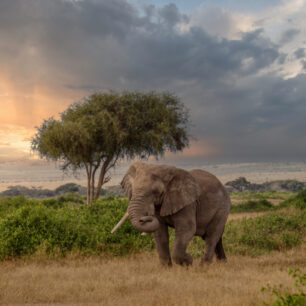
A lone African elephant strides across the savanna at the base of Mount Kilimanjaro. The morning sun, rising after a night of heavy rain, casts the elephant’s silhouette starkly against the dark sky. The landscape, a unique and iconic part of Kenya, is vast and breathtaking. The elephant’s posture is relaxed, yet alert, its trunk raised to test the air for scents. A solitary acacia tree stands beside the elephant, providing a sense of scale and emphasizing the vastness of the savanna. The setting sun paints the horizon with a warm glow, contrasting with the spreading storm clouds above, hinting at the unpredictability of the weather around the great mountain. This image captures the delicate balance between the animals and its environment, a snapshot of the beauty and of the African wilderness.
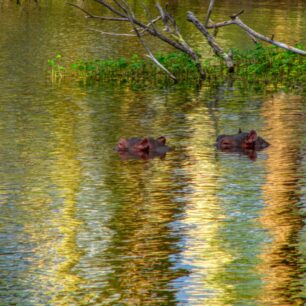
On a gorgeous afternoon in Tsavo West National Park, two hippos glide peacefully over the crystal-clear waters of Mzima Springs. A soft breeze dances across the surface, generating mesmerising ripple patterns that glisten in the golden light of the setting sun. The image is nothing short of stunning, demonstrating the sheer beauty of the African savanna.
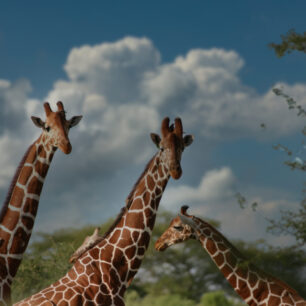
Giraffes, despite their lonely demeanour, lead a rich and intricate social existence. They frequently establish informal associations, or “towers,” comprising of females and their young, whereas adult males prefer to be solitary or form smaller bachelor groups. Within these groups, giraffes participate in a variety of social interactions, including grooming, play, and alloparenting. Their social relationships, particularly among females, can be remarkably strong, spanning years. However, giraffe society is dynamic, with individuals frequently shifting between groups. Giraffes’ fission-fusion social structure allows them to adapt to changing habitats and resources while maintaining social links with a larger network of individuals. Despite previous perceptions, giraffes are far from socially aloof; in fact, they are very gregarious animals with complex and multidimensional lifestyles.
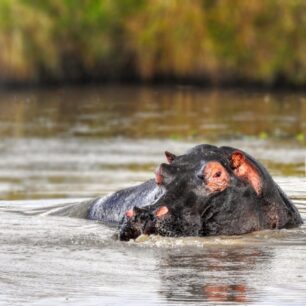
Hippos are normally peaceful animals, but if they feel threatened or disturbed, they can become violent and deadly.
When disturbed in water, a herd of hippos would usually submerge and resurface after several minutes with only the flat top of their heads above water.
On land: If disturbed, hippos can charge at speeds of above 30 km/hr. They are surprisingly agile and can even climb steep banks with proper footing.
Additional elements that can impact hippo behaviour include the presence of young calves, limited resources like as food and water, and time of day (they are primarily nocturnal).
It’s vital to remember that hippos are wild animals and should always be watched from a safe distance. Never approach a hippo, especially if it shows symptoms of stress such as yawning, snorting, or extending its jaws wide.
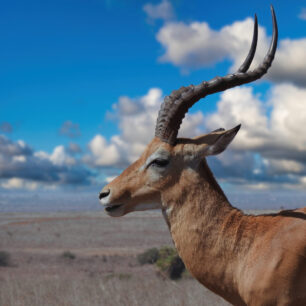
A gorgeous male impala against the stunning backdrop of the African savanna. The impala’s exquisite, lyre-shaped horns stand out against the brilliant blue sky filled with fluffy white clouds. The bright sunlight shines its reddish-brown coat, emphasising its elegant silhouette. The impala emanates grace and attentiveness, capturing the raw beauty of the African plains.
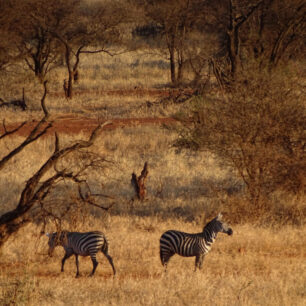
Two beautiful zebras are crossing the dry African grassland. The golden afternoon sun casts lengthy shadows and highlights the zebras’ black and white stripes. They go through the arid grasslands with acacia bushes and shrubs, checking their surroundings. The savanna stretches to the horizon, where hill outlines blend with the sky. It perfectly depicts the raw beauty of Kenya.

In the Masai Mara triangle, a mother elephant, accompanied by her baby and two juvenile elephants, stands gracefully amidst the tall, dry grass. Their majestic presence is heightened as they silhouette against the rugged escarpment, while ominous dark skies loom on the horizon. This scene paints a striking tableau, with the rich, dark blue hues of late afternoon casting an enchanting spell over the savannah landscape.
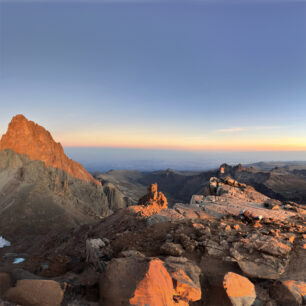
Point Lenana is the third highest peak of Mount Kenya, the second highest mountain in Africa after Mount Kilimanjaro. Standing at an elevation of 4,985 meters (16,355 feet), it is popular among mountaineers due to its accessibility. Unlike Batian and Nelion, the two highest peaks, Point Lenana does not require technical climbing skills and is often reached by hikers. The trek to this peak provides an immersive experience of the diverse ecosystems of Mount Kenya, including bamboo forests, high-altitude moorlands, and finally, the alpine zone. With its relatively moderate climb and stunning panoramic views of the surrounding landscapes, Point Lenana is a favored destination for those looking to experience the magnificence of East Africa’s mountainous terrain.
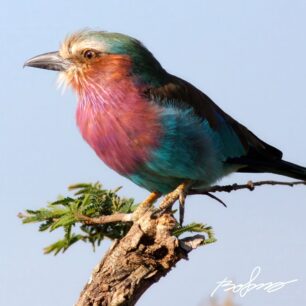
The Lilac-Breasted Roller, scientifically known as Coracias caudatus, is one of the most vibrant and colorful birds found across the Sub-Saharan Africa and the southern Arabian Peninsula. This avian species is most well-known for its breathtaking plumage, showcasing a dazzling array of colors. It has a lilac-colored breast, as its name suggests, along with a turquoise belly and wings that display hues of blue, green, and brown. The long tail feathers, often with black, blue and white tips, add an extra dash of elegance to its appearance. The Lilac-Breasted Roller feeds on a diet of insects, small birds, rodents, and occasionally reptiles. Despite its stunning appearance, it’s a fierce defender of its territory, and is known to be unafraid of diving towards larger predators when threatened. These birds also exhibit a unique flying pattern during their mating rituals, involving fast, shallow dives from considerable heights, which gave them their ‘roller’ moniker. The Lilac-Breasted Roller, with its striking beauty and distinct behaviours, is indeed a spectacle of the African wilderness.
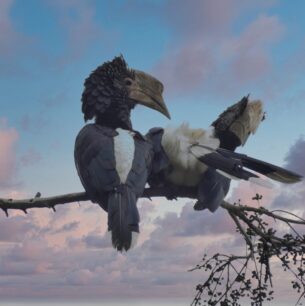
Hornbills are an iconic species of bird found throughout Eastern Africa, including countries like Kenya, Tanzania, and Uganda. Known for their distinctive large, curved beaks – often adorned with a casque, or hollow structure on top – hornbills play a significant role in the ecosystem as seed dispersers, assisting in the propagation of many tree species. In Eastern Africa, you may encounter various hornbill species including the Von der Decken’s Hornbill, the African Grey Hornbill, and the majestic Ground Hornbill. Each species displays unique characteristics; for instance, the Von der Decken’s Hornbill is smaller and has a red bill, while the Ground Hornbill is larger with striking red facial markings. These birds inhabit a range of environments from savannas and woodlands to rainforests, showcasing their adaptability. Hornbills have an intriguing breeding habit, where the female is sealed inside a tree cavity with her eggs, leaving only a small hole through which the male can feed her and the chicks. This unique behavior demonstrates the hornbills’ intricate life cycle and commitment to offspring survival. Indeed, the hornbills of Eastern Africa contribute to the region’s vibrant biodiversity and serve as a fascinating subject of study for birdwatchers and researchers alike.