A hippo swimming against strong current in the Mara River.

The hippo is a strong and agile animal despite its size, in the water it is quite fast if disturbed or if it senses danger, here it is swimming again a very strong current in the Mara River.
Dense bush-land and open savannah that are host to many spices of animals and birds
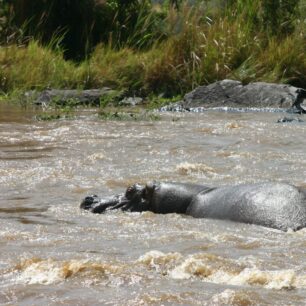
The hippo is a strong and agile animal despite its size, in the water it is quite fast if disturbed or if it senses danger, here it is swimming again a very strong current in the Mara River.
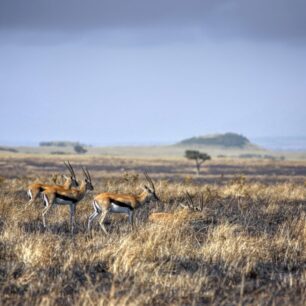
African savannas do burn from time to time, and this is actually a natural and important ecological process where once the rains return, fresh, nutritious green grasses sprout, which grazing animals like zebras, wildebeests, and antelopes depend on. Here is you can see the burnt savanna, it might have been a natural fire, maybe started by lightning.
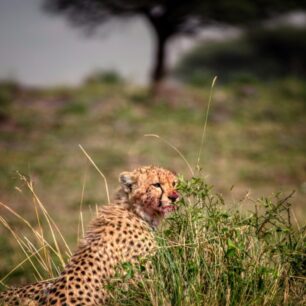
The juvenile cheetah cub sits hidden in the tall grass, its nose still bloody from eating a fresh kill. Moments earlier, its mother had brought down a Grant’s gazelle, to feed its cubs. Now, with a full tummy it sits quietly in the morning sun. We were lucky to capture this brief moment of life on the savanna and spent some time at our lookout spot watching this small family.

Four juvenile hyena cubs rested near the entrance to their burrow, which lay in the middle of the open savanna. Their mother was nowhere in sight, yet they appeared calm and relaxed, although danger lurks everywhere on the great grass plains.
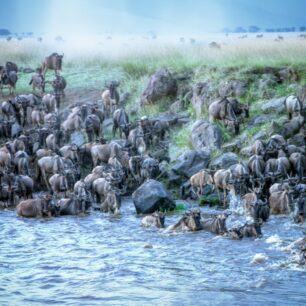
In the late afternoon, a large group of wildebeests gathered on the far shore of the river. We had been waiting for hours for this moment, and then, suddenly, the herd surged forward, charging straight into the dark waters of the Mara River. Within moments, a great column stretched from one bank to the other—an amazing sight.
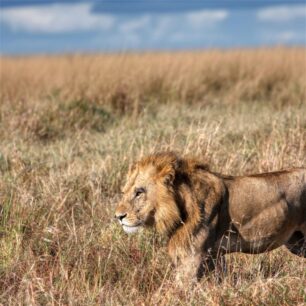
A male lion stalks through the golden grasses of the Kenyan savanna. Its muscular form moves with quiet intensity under a dramatic, partly cloudy sky. With an strong gaze, the lion surveys the vast plains, a predator in its element.
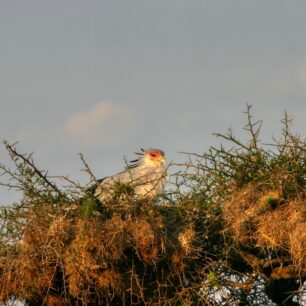
As the warm afternoon sun casts long shadows across the savanna, a secretary bird is sitting atop its large, messy nest perched on a thorny acacia tree. The nest, a mess of p sticks, twigs, and leaves, has been built upon over years, verifying the bond these birds create. The vast expanse of grasslands stretching out before the nest is the hunting territory for this pair. The sun is setting fast and last rays of sunlight illuminate the nest and the gray and white plumage, creating a sharp contrast against the darkening sky. The secretary bird, is sitting silent, while its sharp eyes scans the horizon before settling in for the night.
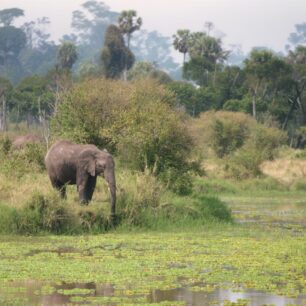
The Musiara Swamp, is a vibrant wildlife hotspot within the Masai Mara National Reserve. This permanent wetland, fed by underground springs, teems with buffalo, lions, hippos, crocodiles, and diverse bird species. Located in the north-central part of the reserve, close to the Mara River, the Musiara Swamp is a crucial haven for the Mara’s abundant wildlife.
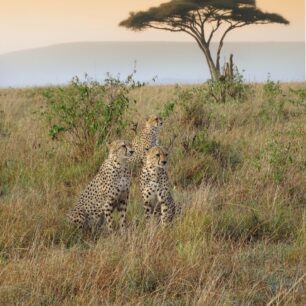
A picturesque scene of three cheetahs resting in the tall savanna grass under the warm glow of the setting sun. It’s only when you look closely that you realize how perfectly camouflaged they are—blending seamlessly into the tall grass landscape, almost invisible to the untrained eye.
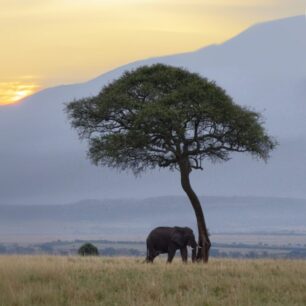
A moody scene where the setting sun last rays cast the Kenyan savanna in a golden light, evoking the unique feeling of the African tall grass plains. A solitary tree stands in the middle of the savanna, enhancing the atmosphere, while the distant escarpment provides a dramatic backdrop
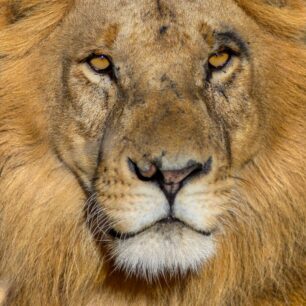
Using a 300mm lens on an old Canon body, I got this close-up of a lion whose face was marked by scars of past battles. These scars likely originated from territorial disputes with other lions or from the desperate defense of its prey during a fight for survival.
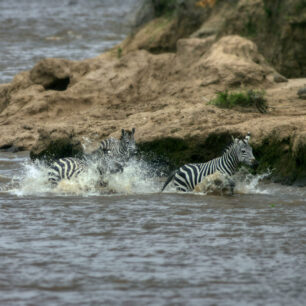
Three zebras found themselves on the wrong side of their usual Mara River crossing, where the banks plunged steeply into very deep water. After an arduous swim, with only their necks held above the current, they finally reached solid ground and immediately broke into a gallop with the water cascading around them.
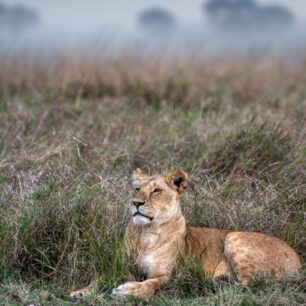
Under the pre-dawn sky, we navigated the Maasai Mara tracks. The air was cold, and a thick fog clung to the landscape, creating a hushed, somewhat eerie atmosphere. Suddenly, nestled low in the tall, damp grass, we saw a lioness resting. Her pride was likely nearby, though hidden from view.
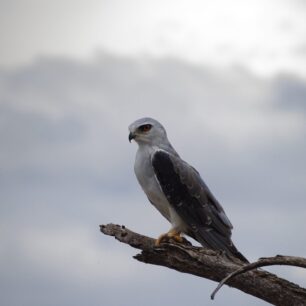
Returning from a late-afternoon game drive during the rainy season, the sun is setting on the horizon, and darkness begins to cover the savanna. Suddenly we spot a Black-winged Kite sitting high on a dead branch, its silhouette perfectly framed against the dark clouds.
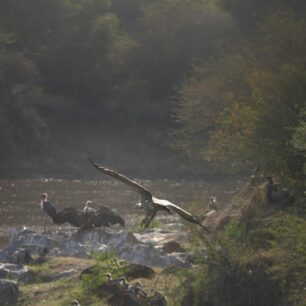
Wildebeests, zebras, and other animals that migrate across the Mara River sometimes fall victim to its powerful currents, drowning in their attempt to cross. Their bodies are carried by the current to specific bends along the river, where the shoreline becomes clogged with dead animals. At these bends, hordes of vultures and marabou storks gather, feasting on the carcasses that drifted ashore.
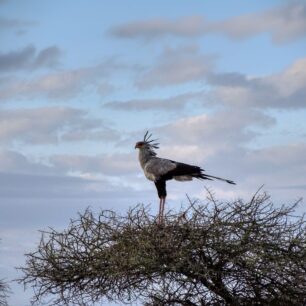
The night before, a fierce downpour had swept across the savanna. As we set out on our game drive the next morning, the animals were just beginning to moving around on the soggy ground. And there it was—perched atop a tree, a majestic Secretary Bird surveying the landscape with a background of torn apart clouds.